Production-ready SaaS landing template for focused products.
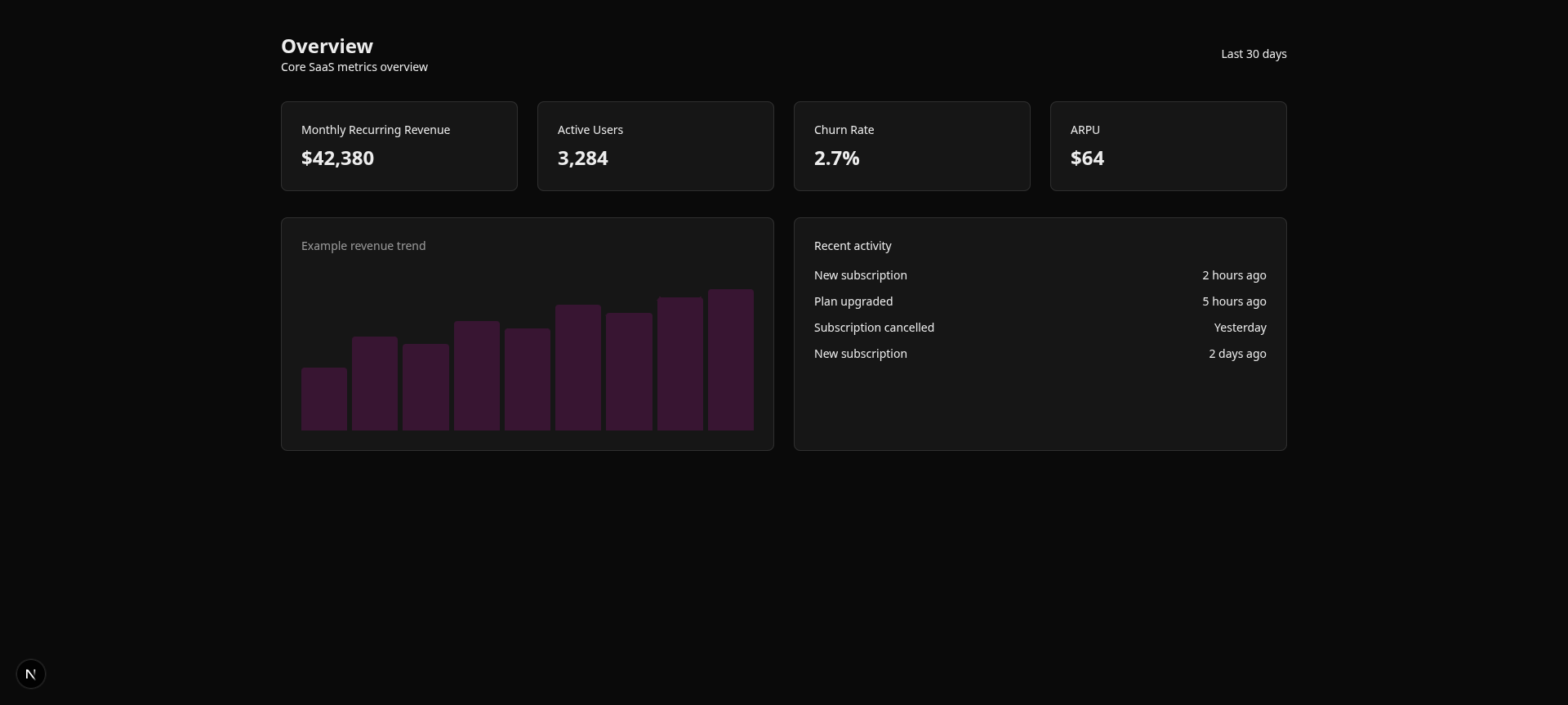
An opinionated Next.js landing template demonstrated through a clean analytics dashboard example. Built for developers who care about clarity, structure, and long-term maintainability.
One-time purchase · Source code only · No backend or service included
“Most SaaS landings focus on persuasion before clarity. This template prioritizes structure and product understanding first.”
Why this template exists
- Most SaaS templates are bloated with unnecessary features
- Generic layouts that fail to communicate product value clearly
- Codebases that are difficult to adapt or maintain
- Marketing-driven designs that ignore product fundamentals
The approach
A single-page SaaS landing template built around clear structure and opinionated decisions. The included analytics dashboard example exists solely to demonstrate realistic layout, hierarchy, and visual balance — not to represent a finished product.
Complete one-page SaaS landing
Production-ready Next.js and TypeScript codebase with Tailwind CSS and an SEO-friendly structure.
Opinionated layout and sections
A deliberate hierarchy with predefined sections: Hero, Problem/Solution, Features, Preview, Pricing, and Final CTA.
Centralized content configuration
All copy and content are managed from a single configuration file for fast and predictable customization.
Responsive and accessible by default
Mobile-first layout with accessibility best practices applied throughout the template.
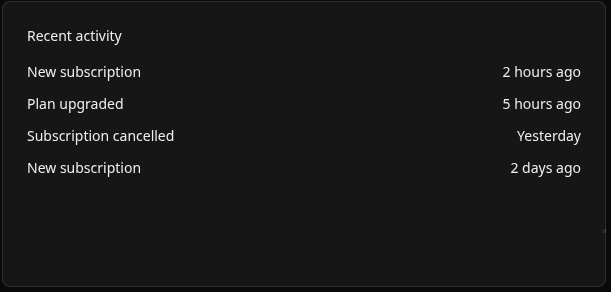
A realistic SaaS example throughout the template

This template is for
- Technical SaaS founders building long-term products
- Developers who value clean, readable code
- Small teams shipping serious B2B software
- People comfortable editing and maintaining source code
Price
99€
One-time purchase · Source code only
No subscription. No support. No services included.
This template is intentionally opinionated. It exists to save time on structure and execution — not to replace product thinking or decision-making.